


We have provided these FAQs and associated documents to help you reduce your own risk of acquiring bed bugs, and to more effectively identify and safely manage a suspected bed bug infestation. This information has been assembled to assist homeowners, property managers and tenants with information relevant to the identification and management of bed bugs. Brand names have not been mentioned, nor do we endorse any particular commercial product. This website is intended for informational purposes and is not meant to substitute for the advice provided by a medical professional. Always consult a physician if you have personal health concerns.
If you have questions that you do not see addressed here, please feel free to contact us. We will strive to answer any specific question you may have concerning bed bugs and will expand and add to this list of FAQs as necessary over time.
What are bed bugs?
Bed bugs are small wingless insects that feed solely upon the blood of warm-blooded animals. Bed bugs and their relatives have evolved as nest parasites. Certain kinds inhabit bird nests and bat roosts and await the return of their hosts; others have adapted well to living in the ‘nests’ (homes) of people.
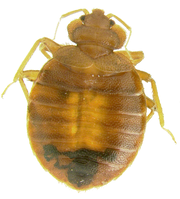
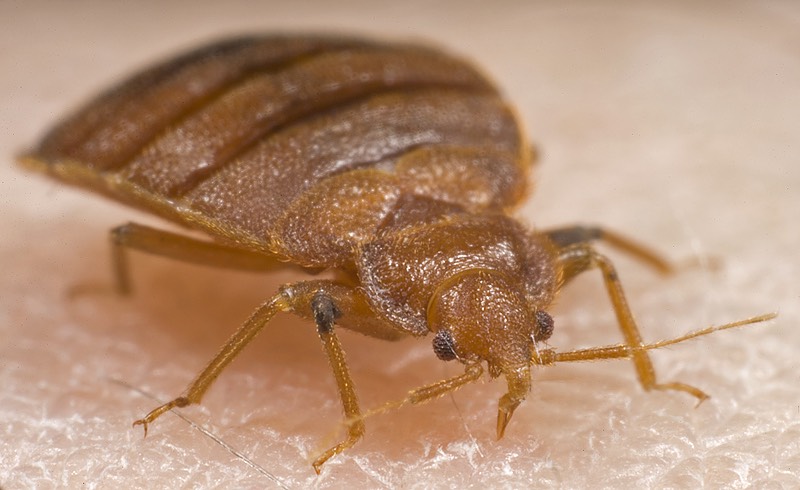
Hatchling bed bugs are about the size of a poppy seed, and adults are about 1/4 of an inch in length. From above they are oval in shape, but are flattened from top to bottom.
Their color ranges from nearly white (just after molting) or a light tan to a deep brown or burnt orange. The host’s blood may appear as a dark red or black mass within the bug’s body. Because they never develop wings, bed bugs cannot fly. Although bed bugs can crawl, run and climb, they cannot jump. Bed bugs seek shelter in dark cracks and crevices. Cast skins and carcasses of bed bugs are sometimes discovered. Although such findings confirm that the dwelling was previously infested, it does not confirm that any continue to infest the residence. Before you conclude that the home, office or other dwelling is currently infested by bed bugs, inspect carefully for live crawling bed bugs, AND be certain that these are bona fide bed bugs. Many other kinds of small bugs are frequently mistaken to be bed bugs. Most kinds of bugs found in the home, and even on the bed, are not necessarily bed bugs. Similarly, other kinds of creatures will bite, feed on blood and cause irritation. Pest control measures taken against bed bugs can be quite costly and generally require the use of various kinds of pesticides. The means to battle bed bugs can be remarkably different than to combat other bugs. Hence, it is critical to ensure that the bugs are correctly identified by an independent and competent source BEFORE you attempt to take action.
Do bed bugs cause harm or spread pathogens?
Do bed bugs cause harm or spread pathogens (disease-causing germs)?
Bed bugs seek out people and animals, generally at night while these hosts are asleep, and painlessly sip a few drops of blood. While feeding, they inject a tiny amount of their saliva into the skin. Repeated exposures to bed bug bites during a period of several weeks or more cause some people to become sensitized to the saliva of these bugs; additional bites may then result in mild to intense allergic responses. The skin lesion produced by the bite of a bed bug resembles those caused by many other kinds of blood feeding insects, such as mosquitoes and fleas. The offending insect, therefore, can rarely be identified by the appearance of the bites. A physician should be consulted to rule out other causes for the lesions and to offer treatment, as needed. The affected person should resist the urge to scratch the bites, as this may intensify the irritation and itching, and may lead to secondary infection. Physicians often treat patients with antihistamines and corticosteroids to reduce allergic reactions and inflammation. Despite what you may have heard or read elsewhere, bed bugs are not known to transmit any infectious agents.
Where do bed bugs occur?
Bed bugs and their relatives occur nearly worldwide. Bed bugs became relatively scarce during the latter part of the 20th century, but their populations have resurged in recent years, particularly throughout parts of North America, Europe, and Australia. They are most abundant in rooms where people sleep, and they generally hide nearest the bed or other furniture used for sleeping. Bed bugs are most active in the middle of the night, but when hungry, they will venture out during the day to seek a host. Their flattened bodies allow them to conceal themselves in cracks and crevices around the room and within furniture. Favored hiding sites include the bed frame, the seams around mattresses and undersides of box springs. Clutter around the room offers additional sites for these bugs to hide, and increases the difficulty in eliminating bed bugs once they have become established. Bed bugs also have been found in schools, health care facilities, trains and buses, offices and yet other kinds of structures.
How do bed bugs invade a premises?
Because bed bugs readily hide in small crevices, they and their eggs may accompany (as stowaways) luggage, furniture, clothing, pillows, briefcases, purses, boxes, and other such objects when these are moved between homes, hotels, offices and yet other places. Used furniture, particularly bed frames and mattresses, pose the greatest risk of harboring bed bugs and their eggs. Thus, one should carefully scrutinize and consider the history of any used furniture, particularly those found on the sidewalk, but also those at yard sales and in used furniture stores. Even new furniture may become exposed and contaminated with bed bugs if transported in a vehicle that had, itself, become infested.
How can you tell if a residence or building is infested?
Bed bugs infest only a small proportion of buildings, but they should be suspected if residents complain of bites that occurred while sleeping. BEFORE you conclude that the home or office is infested by bed bugs, you should find at least one bona fide bed bug. Bites and bite-like lesions may be caused by diverse creatures of kinds, including, but not limited to, fleas, biting mites, and mosquitoes. Similarly, such bite-like lesions may be attributable to infections, allergic reactions, drug interactions, and other medical problems. You should consult with your physician about any medical concerns. Your doctor may be able to say that your lesions are consistent with an insect bite. It is unlikely, however, that she/he can identify the kind of bug responsible merely by examining the lesions. So, find a bed bug before you take any actions to manage, control or eliminate them!
If in a residence, then the bedroom and other sleeping areas should be carefully examined for bed bugs and signs of bed bug activity. Folds and creases in the bed linens, and seams and tufts of mattresses and box springs, in particular, may harbor bed bugs or their eggs. They may also be found, amongst many other places, within pleats of curtains, beneath loose areas of wallpaper near the bed, in corners of desks and dressers, within spaces of wicker furniture, behind baseboards and picture frames, above drop ceilings, and in laundry or other items on the floor or around the room. Sometimes, characteristic black or dark brown fecal spots of bed bugs are apparent on the bed linens, mattress or walls near the bed. A peculiar coriander-like odor may be detected in some heavily infested residences. Bright blood-red spots on the linens or mattress are not likely associated with bed bugs. If in a school or office setting, then inspect desks, chairs, bookcases and other furniture for evidence of bed bugs.
If you find a bug of concern, capture it using clear tape (packaging tape is ideal), and gently affix this to a sheet of white paper. The bug will not be able to free itself. You may then try to take a digital photo to send to IdentifyUS electronically, or you may send us the actual specimen. To learn more about submitting images and specimens for evaluation refer to our Specimen Evaluation Form.
Because bed bugs and other kinds of pests may be difficult to find, you can set traps in an attempt to capture one or more. Traps tend to be fairly insensitive devices for capturing bed bugs, but they are useful, nonetheless. You need only capture one bed bug to confirm the identity of your pests. Your options include:
- Adhesive tape (such as duct tape): Wrap the tape around the legs of beds and desks, leaving the sticky side of the tape facing outwards. This will capture virtually any bug that wanders onto the adhesive surface. You may then remove the tape (cutting it carefully).
- Insect glue traps: These are available from pest control companies, large hardware stores and from many online vendors. Because bed bugs are not attracted to the baits on these boards, you can use the non-baited kinds of traps. Array these under the beds and under or behind other furniture. Check them every few days for captured bugs.
- Wet or dry moat traps: These may consist of cups or saucers under each leg of a bed. Bed bugs will drown if they fall into such vessels if they contain soapy water or mineral oil. Used dry with talcum powder, such vessels will likely prevent bugs from escaping.
- Carbon dioxide attractant traps: Commercial traps are available that liberate carbon dioxide gas, heat and yet other components that may attract bed bugs. These traps tend to be costly, but may be provided for brief intervals by some pest control companies.
Each of these is potentially useful for surveillance. None, however, should be expected to eliminate bed bugs.
‘Bed bug sniffing dogs’ have increasingly become advertised, offered and relied upon for detecting bed bugs in homes and offices. If well-trained and accompanied by an expert handler, they can help confirm the presence of bed bugs as well as focus on where bed bugs may be hiding. If you’ve already discovered a bed bug, then there seems very little reason, if any, to employ such services. If you suspect that you have bed bugs, but have been unable to find one, then such specialized canine detection dogs may help solve the mystery. A good bed bug detection dog will be trained to provide a defined response when it encounters the scent of bed bugs. Such a dog may paw at the area of interest, may sit and stare intently at the site, or offer yet other behaviors. The handler may then state that the dog’s behavior confirms or suggests the presence of bed bugs. It is useful and wise to be wary at this point. Whereas the dog may, indeed, have detected the odor of an existing bed bug, it might also have noticed the scent of a previous infestation, or even that of some completely irrelevant source (such as that of another animal or of a food item).
You are advised to search the site for a bed bug. If you find one, then the dog and the owner have earned their rewards. If, however, no bed bug or other objective findings (cast skins of bed bugs and fecal spotting) of bed bugs are evident, then the dog’s behavior (and the conclusions of the handler) should be questioned. Before you spend hundreds or thousands of dollars (and have pesticides applied to your property) to abate a bed bug infestation, make sure that you’re really battling bed bugs. Ask the dog owner/handler about their links, if any, to a purveyor of pest control services. One associated with a pest control company is not necessarily biased, but you should be aware of the potential.
What can I do to manage a bed bug problem?
Refer to the management scheme (flow chart) listed in our bed bug documents section for guidance.
Before considering treatment, collect specimens and confirm their identity. You can use our Specimen Evaluation Form to submit a bed bug specimen to IdentifyUS for examination and we will respond with our analyses of what we (you) found.
Managing bed bugs often requires a multi-faceted approach that generally includes cleaning, room modifications, and insecticidal treatments to the residence.
Search for signs of bed bugs - Carefully inspect bed frames, mattresses, and other furniture for signs of bed bugs and their eggs. Although dead bed bugs' cast bug skins and blood spots may indicate an infestation that occurred previously, they do not confirm that an infestation is still active. Search for live (crawling) bugs and ensure they are bed bugs before considering treating. To confirm the identity of the specimens, you may elect to use the identification and evaluation services of IdentifyUS.
Reduce clutter - This will limit hiding places for bed bugs, and reduces the number of surfaces that may need to be treated. Do not dispose of items that have monetary, practical or sentimental value. These can be treated. Do not dispose of mattresses, box springs, bed frames or other furniture. These, too, can be treated or managed (more on this below).
Thoroughly clean the infested rooms as well as others in the residence. Scrub infested surfaces with a stiff brush to dislodge eggs, and use a powerful vacuum to remove bed bugs from cracks and crevices. Dismantling bed frames will expose additional bug hiding sites. Remove drawers from desks and dressers and turn furniture over, if possible, to inspect and clean all hiding spots.
Mattresses and box springs can be permanently encased within special mattress bags. Once they are installed, inspect the bags to ensure they are undamaged; if any holes or tears are found, seal these completely with permanent tape. Any bugs trapped within these sealed bags will eventually die. Such encasements are less expensive than new mattresses and will make it unnecessary to treat the mattress with pesticide. Encasing mattresses, however, will not likely eliminate an infestation; some bed bugs are likely to lurk elsewhere in the residence.
To prevent bed bugs from crawling onto a bed, pull the bed frame away from the wall, tuck in bed linens so they won’t contact the floor, and create a barrier to prevent bed bugs from accessing or climbing upon the bed legs. The legs can be wrapped with adhesive tape (sticky side out), or they may be placed in dishes.
To reduce opportunities for bed bugs (and other pests) to access your apartment or room, consider caulking and sealing holes where pipes and wires penetrate walls and floor, and filling cracks around baseboards and cove moldings to further reduce harborages. Check with your landlord and /or electricians before opening any electrical switch/outlet covers.
If you own your residence, we suggest you contact a licensed pest control operator who is knowledgeable and experienced in managing bed bug infestations. Ask the pest control company for references, and ask at least a few of their customers about their experiences before you agree to any contract.
If you are a tenant, contact your property manager or landlord to discuss your respective obligations, and to agree on a plan to manage the infestation. Generally, landlords are legally required to contract with a licensed pest control operator. Check with your department of health for specific regulations that pertain to your municipality or state.
Insist upon a written integrated pest management (IPM) plan from the pest control operator. This plan should: detail the methods and insecticides to be used by the pest control operator; describe the efforts expected by you, the building manager and tenants; include copies of the labels and MSDS (material safety data sheets) for each product to be used; indicate how quickly and effectively the problem will be abated; and describe what kind of warranty, if any, that the pest control operator provides. IdentifyUS can help you with this process and will provide expert oversight on a contract basis in order to provide you with an independent and objective voice in the matter.
Because bed bugs and other pests may spread through cracks and holes in the walls, ceilings and floors, it is wise to inspect adjoining apartments on the same floor as well as those directly above and below. Those found infested should be managed, accordingly.
What are my rights and obligations?
What are your rights and obligations in determining and mitigating a bed bug infestation?
Landlords and property owners have specific legal obligations to provide safe and habitable accommodations for tenants. Certain infestations, including bed bugs, may constitute an unacceptable condition. Tenants have an obligation to cooperate with owners and landlords. This includes preparing the apartment so that the pest control operator can easily inspect the rooms and treat, if necessary. Contact your state or municipal health agency or housing authority for more guidance on these issues.
What not to do if you find bed bugs or suspect they are present
Don’t panic. Although bed bugs can be annoying, they can be battled safely and successfully if you adopt a well-considered strategy.
Do not apply pesticides unless you fully understand what you are applying and the risks involved. You may be legally liable if you misapply a pesticide, or apply it without a license to the property of another (including common spaces in apartment buildings). Generally, landlords, owners and building managers cannot legally apply pesticides. They should, instead, hire a licensed pest control operator to confirm the infestation and to develop an integrated pest management plan.
Do not dispose of furniture that is useful. Infested furniture can be cleaned and treated. Placing infested furniture (particularly mattresses) into common areas or on the street may simply help spread bed bugs to the homes of other people. Infested furniture intended for disposal should be defaced to make it less attractive to other people. Officials in some municipalities affix to potentially infested furniture a label to warn of bed bugs. To reduce opportunities of infested furniture re-entering their building, building managers should ensure that any disposed furniture is locked within a dumpster or immediately carted away to a landfill or waste facility.
How can you have suspected bed bug specimens examined?
Specimens suspected of being bed bugs should be collected into small break-resistant containers (such as a plastic pill bottle or a zipper-lock plastic bag. They may also be secured to a sheet of white paper using clear packaging tape. You may kill bed bugs by placing them into your freezer for an hour or more. You can then use your digital camera to capture an image and upload that image to the IdentifyUS website for us to evaluate. If you prefer, you may send us the actual specimens along with a Specimen Evaluation Form. Even if you are uploading digital images, you should still include the Specimen Evaluation Form to make sure we have complete information.
What you should know about insecticides & other methods for treating bed bugs
Property owners may purchase and apply certain pesticides to their own property, and tenants may do so (with certain exceptions) to their own apartments. Generally, owners and tenants may not, however, apply these products to common use areas or to the property of another person. A licensed pest control operator may perform these tasks more effectively, safely and legally. If one apartment or room is found infested, adjoining rooms and those immediately upstairs and downstairs should be inspected and managed, as appropriate.
Carefully read the label before applying any pesticide. Apply the product only if you fully understand the instructions, and if you have the appropriate training/certification and equipment. Note that although many kinds of insecticides may be purchased via the Internet, some States restrict the sale, shipment and use of certain products. Check with your State's pesticide regulatory agency if you have any questions.
Do NOT apply any insecticide or pesticide to mattresses or to surfaces that would be in direct contact with a person, unless the label instructions specifically state that the product can be applied in that manner. Some products can be harmful to people, pets the environment, and to your home. READ and UNDERSTAND the instructions and warnings on the label.
Insecticide formulations used to treat bed bug infestations consist mainly of the following:
Inert insecticidal dusts consist of a finely ground glass or silica powders (such as diatomaceous earth). These dry dusts may be applied in cracks and crevices, or blown into wall voids and into hollow tubular bed frames. Because these microscopic particles are hard and sharp, they may abrade the insect's cuticle, causing some direct damage and hastening water loss. Some dust formulations include other kinds of insecticides.
Contact insecticides are those that kill the bugs shortly after they come into direct contact with the product or its residue. Many of these consist of one or more kinds of pyrethoids (synthetic analogs of the extract of chrysanthemum flowers). These products tend to rapidly ‘knock down’ bugs that wander over or otherwise contact the insecticide. Some pyrethroids, however, can be irritating and repellent to many insects, and bed bugs may avoid treated surfaces. Furthermore, many populations of bed bugs are resistant to certain of the pyrethroids. Other contact insecticides contain chlorfenapyr, imidacloprid or yet other active ingredients that are less repellent than some pyrethroids, and which should be effective to combat bugs resistant to pyrethroids.
Insect Growth Regulators (IGR) affect the development and reproduction of insects. Although these products can be quite effective in reducing the population of the pests, they do not kill bugs quickly. Thus, pest control operators often use these products as a supplement to other kinds of insecticides.
Fumigation is a highly specialized process traditionally pursued to abate structural pests (such as termites and carpenter ants) in buildings. Increasingly, it is being used to battle bed bugs. Buildings to be fumigated are emptied of people and pets, and then 'tented' (enclosed and sealed within special tarps). A pesticidal gas is then infused into the building. Special monitors, inserted into wall voids and elsewhere, ensure sufficient exposure throughout the structure. After a defined interval, the gas is then vented to the atmosphere, and the tarps removed. Once the pesticidal gas concentration has fallen below detectable levels, the structure can then be reoccupied. Fumigant gases more readily penetrate wall voids, furniture and clothing than do insecticidal powders or liquids. Such gases, however, offer no residual benefits. Hence, whereas fumigation will quickly kill any insect or other creature within a treated structure, bed bugs and other pests may be reintroduced within the possessions of residents as they reoccupy the building.
Note that the fumigation methods described above are provided solely by specially licensed professional applicators. This is far different than the aerosol fogging devices (often called 'bug bombs') that can be purchased for a few dollars in retail markets. The droplets produced by aerosol foggers are far less likely than gases to penetrate cracks and crevices. Furthermore, such devices may pose a real risk to occupants as well as the dwelling being treated.
Certain fumigation companies now provide services to treat individual rooms or apartments. Some offer specialized moving vans or containers in which household and office furniture, clothing and other items may be treated. Such a strategy can allow one to retain one's possessions and move them to a new residence with much assurance that bed bugs or other pests will not stowaway in the items so treated.
Some items that can be sealed within plastic bags may be exposed to fumes of insecticidal vapors. Slow-release insecticidal strips (sometimes referred to as "no-pest strips" are impregnated with the insecticide dichlorvos. A strip of this material may be placed within the bag containing furniture, electronic devices or other items, taking care to protect the surface of the items to be treated. The bag is then sealed and exposed to the vapors for days to weeks, depending on the size of the bag and contents.
Non-insecticidal means
Chilling and freezing: As with all insects, bed bugs are cold blooded creatures. At temperatures below about 55F, bed bugs tend to become increasingly inactive. They may simply hide and wait within unheated dwellings from autumn through spring, even avoiding opportunities to take a blood meal. Hence, residents of infested dwellings may be spared bites until the indoor environment warms naturally in the springtime, or earlier as indoor heat sources activate the otherwise hibernating bugs.
Bed bugs and their eggs can succumb to freezing conditions, but success depends upon many factors. The colder the temperature (below freezing), and the longer these low temperatures are maintained, the greater the chances of killing bed bugs and their eggs. The bugs may die from damage resulting mainly from ice crystal formation within their tissues, and from water loss (as the humidity tends to be very low at such cold temperatures). Furniture and other items may be 'treated' by prolonged freezing, either in deep freezing warehouses or within unheated outbuildings. Do note that bed bugs are fairly hearty and are adapted to surviving for long intervals as they wait for their hosts to return from their migrations from warmer locations. Hence, this is far from an assured method. Whereas frozen items may, in many cases, be rendered free of live bed bugs, this effort will have been in vain if the same items are then carried back into an infested dwelling. The building, itself, may be 'treated' in this manner, but this is practical mainly in seasonally-used homes or cabins at high latitudes or altitudes. Such buildings must be properly prepared to avoid damage from frozen plumbing and other risks.
Some companies offer a service that relies upon the directed release of carbon dioxide (dry ice) 'snow' to freeze bed bugs and their eggs on furniture, around baseboards and elsewhere. Bugs and eggs directly contacted by the dry ice will likely be killed instantly. This method, however, may fail to penetrate well into cracks and crevices, into wall voids, and into other objects where bed bugs may be hiding. By itself, applications of dry ice in this manner should not be expected to eliminate a bed bug infestation from a home, apartment or other dwelling.
Drying: Bed bugs and their eggs will die as they lose water. Water loss can result from evaporation in low humidity environments, and may be hastened if their cuticle is damaged. Bed bugs restore their water balance solely by blood feeding.
Heat: At temperatures rise to 100F, bed bugs lose some vigor and their reproductive output becomes diminished. As temperatures rise further, they increasingly become burdened and their survival rate drops. Bed bugs and their eggs increasingly succumb as temperatures rise, and are maintained above, about 110 F. These lethal temperatures can be attained by use of industrial heaters operated by specialty companies. Success depends upon ensuring the lethal temperatures are attained within dwelling (including the wall voids), and amongst the contents therein. Small quantities of items (e.g. luggage) may be heated within a closed vehicle parked for many hours in full sunlight. This is practical only in summertime when the temperature within the vehicle attains temperatures lethal to bed bugs.
Steam: At the point of generation, water vapor produced by boiling water can instantly kill bed bugs and their eggs. Many kinds of household and industrial devices exist to generate steam, and some are sold or operated to direct a narrow stream of steam into cracks and crevices around a room, and onto parts of furniture. Whereas this method may kill bugs and eggs treated directly, it will not likely have any effect upon those in protective shelters.
Laundering of clothing (with or without bagging): Clothing that is suspected of harboring bed bugs or their eggs may be rendered free of bugs by washing in water that is sufficiently hot, or simply dried on high heat (with or without prior washing). Pressing with a hot iron will kill bugs instantly. Traditional dry cleaning methods should also kill bugs and their eggs.
A pest control operator may consider and propose a variety of other methods to manage bed bugs. An infestation that affects most or all units in a building may be best managed by treating the entire building. This requires close cooperation by managers and tenants, and may require the tenants to leave the building for a few hours or even several days. Only licensed and knowledgeable pest control operators should attempt such treatments.
Be aware that you may spread bed bugs from your own infested residence if you move to another apartment, home or hotel. Generally, it is best to leave your possessions in your home or apartment when it is treated. All food and eating utensils should be protected from insecticidal products. The product labels will offer additional guidance.
Some building managers have allowed infested apartments to remain vacant of tenants for extended intervals in attempts to ‘out wait’ or ‘starve’ the bed bugs. This strategy would rarely make good sense, as bed bugs are well adapted to patiently wait for the return of their hosts. Each bed bug needs just one full blood meal to develop to the next developmental stage, and they can readily wait many months between feeding opportunities. Under ideal conditions, adult bed bugs can survive for more than one year between meals. Thus, infested residences should be aggressively managed to eliminate bed bugs.
What might you do when returning from a visit to a bed bug infested residence?
Travelers increasingly encounter bed bugs during their stays away from home. If signs of bed bugs were observed or suspected, consider the possibility that you may have unwittingly transported bed bugs or their eggs in your luggage and other personal effects. Clothing should be laundered in a manner to kill bugs and their eggs before or as soon as these items are brought back into the home. Suitcases should be carefully inspected, scrubbed with a stiff brush, and thoroughly vacuumed. Leaving such luggage for several hours in a closed vehicle in full summer sun may render the items bug free.
Practice 'safe visiting' When visiting the homes of others, avoid placing your coat or belongings upon a bed, sofa or other furniture that may harbor bed bugs. If you must bring your coat inside, hang it on a hook on the back of a door, or elsewhere away from sleeping areas. Similarly, keep purses, briefcases and other such items off and away from such sleeping areas. When others visit your home, do not pile their own coats and belongings on your own bed.
What should be done in schools about bed bugs?
Bed bugs have spread far and wide through the country and are to be expected in every community regardless of the population, per capita income, or ethnic / racial make up of the population. Bed bugs infest our dwellings. Except for a few minutes of contact during which the bugs may feed on blood in our skin, bed bugs do not remain on a person. Bed bugs are secretive animals. When not feeding, they hide away in cracks and crevices where they'll be less noticed. Whereas most will tend to hide near where a person sleeps regularly, some may wander into clothing pockets and cuffs, book bags, brief cases, purses, luggage and anywhere else that affords them shelter. If the item in which one or more may be hiding is then taken to school or work, then the little stowaway(s) get to ‘see the world’, so to speak. Hence, bed bugs will be carried into schools within the belongings of students as well as adults.
Should a child from a bed bug infested home be shunned or excluded from school? Absolutely not. To exclude that child would be an unconscionable injustice, and it could provoke legal action against the school. Children from infested homes do not hold a monopoly on bringing unwanted 'pests' to school. Teachers, principals, custodial workers, parents and others are just as likely to ferry bed bugs (as well as cockroaches and other urban pests) from their own homes as well.
So, what can and should be done? First and foremost, educate the kids, their care-givers and the school workers (including teachers and staff) about bed bugs and appropriate means to manage and eliminate them. There should be no shame in ‘having’ bed bugs at home. The presence of bed bugs has nothing at all to do with cleanliness or housekeeping.
Next, work with pest management professionals to develop written integrated pest management plans, one for school and another to help guide families and school personnel. If bed bugs are suspected in a classroom, the room should be inspected, and non-toxic insect glue traps should be arrayed in strategic locations. These traps should be examined periodically, and a specialist should examine any suspected bed bug. Refer to our Specimen Evaluation Form if you would like to have a sample identified.
In general, insecticide treatments within schools should be avoided unless absolutely necessary, and virtually never as preventative measure. Any such application must comply with relevant federal, state and local regulations.
If it is known that a child's home is infested with bed bugs, encourage the child to bring only the required items to school each day until the problem has been abated. Isolating the child's book bag, coat and other items may be psychologically damaging to the child, and generally unwise and unproductive. Such an action may backfire, as it will persuade others to remain silent about a bed bug or other infestation at home. Similarly, if the homes of school personnel are infested, these folks should take steps to leave their items at home (and to have their home treated appropriately).
IdentifyUS has worked with many school districts on bed bug issues, and some schools have adopted our strategies to monitor and manage a problem should it occur. We encourage school officials to contact us to discuss our identification resources as well as our consulting services in this regard.

